
If you have diabetes, contact Atlanta Vision Cataract & Laser Center in Atlanta, GA to get the necessary exams you need to keep your eyes as healthy as possible. Dr. Achiron and Dr. O’Day help patients in the Atlanta, Hapeville, East Point, Forest Park, and College Park area.
How Does Diabetes Affect Vision?
Consistent high blood sugar levels damage the walls of the eye and its small blood vessels, which then affects both their function and structure. These tiny blood vessels may leak, thicken, close off, develop clots, or grow defects. This is known as microaneurysms. Often, fluid starts to collect in the area of the retina that was previously used to perform tasks like reading. This disorder is referred to as macular edema. In more severe cases, the retina is deprived of its vital blood supply and then begins to grow new, but flawed, vessels, a process known as neovascularization. These tiny, delicate vessels can bleed and develop vision-weakening hemorrhages, subsequent scar tissue, and also cause retinal detachment (when the retina separates from the back of the eye). The newly developed vessels can additionally impede fluid flow inside the eye and thus produce glaucoma.
What are the Tests to Diagnose Diabetic Retinopathy?
It’s imperative for anyone suffering from diabetes to get an eye exam each year in order to detect diabetic retinopathy as early as possible. Visit your ophthalmologist at Atlanta Vision Cataract & Laser Center so they can examine your eyes using a device called an ophthalmoscope, discuss your medical history, and have you read a standard eye chart.
Diabetic Retinopathy Comprehensive Eye Exam
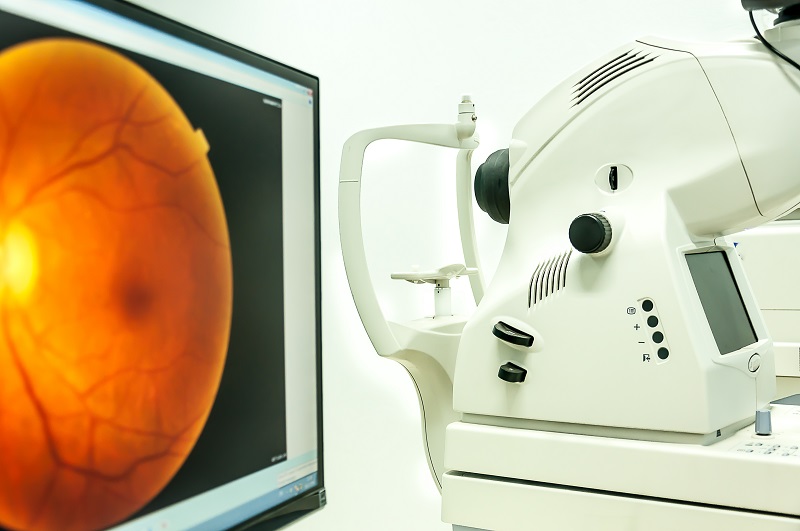
Some of the distinctive features of diabetic retinopathy can’t be seen during a routine eye exam and therefore requires a special exam. In order for the doctor to get a more detailed look inside the eye, he’ll first administer eye drops to dilate the eye’s pupils and then proceed to look at the retina with special lenses and a slit lamp. A fluorescein angiography test can accurately reveal any changes in the function and structure of the retina’s blood vessels. To perform this special test, the doctor will inject a fluorescent dye into your vein and then take pictures of your retina as the dye works to highlight the blood vessels. It’s likely that your eye exam will also consist of a cataract and glaucoma check, both of which develop more often in individuals with diabetes and can also eventually cause problems with vision.
Diabetic Retinopathy Treatment Options
Diabetic retinopathy treatment should ideally involve both an ophthalmologist and a medical doctor. Your regular medical doctor will help control your blood sugar levels as well as treat other diabetes complications that could ultimately affect your heart and kidney function. On the other hand, your ophthalmologist can treat retinopathy directly with either a laser or a surgical process, known as vitrectomy, in order to prevent more vascular changes from occurring and help preserve your vision.
Laser photocoagulation is a treatment that works partly by creating small, pain-free retinal burns that effectively seal off leaking blood vessels and also decrease swelling. The extent of the retinopathy will determine the required number of treatments and burns the doctor makes along with how well the eye responds to the treatment overall. It may take several months to determine whether or not the treatment is actually effective.
Diabetic Retinopathy FAQs
How does diabetes affect vision over time?
High blood sugar can damage small blood vessels in the eye, causing them to leak, thicken, close off, or form clots. This can lead to fluid buildup in the retina (macular edema) and, in advanced cases, abnormal new vessel growth (neovascularization) that may bleed, form scar tissue, and increase the risk of retinal detachment or glaucoma.
Why is an annual eye exam important if I have diabetes?
Yearly eye exams help detect diabetic retinopathy as early as possible—often before you notice symptoms. Early detection can protect your vision by allowing your ophthalmologist to monitor changes and recommend treatment when needed.
What tests are used to diagnose diabetic retinopathy?
Your ophthalmologist may review your medical history, check your vision with an eye chart, and examine your eyes using an ophthalmoscope. If needed, a more detailed comprehensive exam includes dilating drops and evaluation of the retina using specialized lenses and a slit lamp.
What is fluorescein angiography and why might I need it?
Fluorescein angiography is a special test that can reveal changes in how the retina’s blood vessels function and appear. A fluorescent dye is injected into a vein, and images are taken as the dye highlights blood vessels in the retina to help identify leakage or abnormal vessel growth.
What are common treatment options for diabetic retinopathy?
Treatment often involves a team approach: your medical doctor helps manage blood sugar and other diabetes-related health issues, while your ophthalmologist treats the eye directly. Options may include laser treatment (laser photocoagulation) to seal leaking vessels and reduce swelling, or a surgical procedure called vitrectomy in more advanced cases.
How long does it take to know if laser photocoagulation is working?
Laser photocoagulation works by creating small, pain-free retinal burns to seal leaking blood vessels and decrease swelling. Depending on the severity of retinopathy, multiple treatments may be needed, and it can take several months to determine how effective the treatment is.